
Mechanical Odor Traps
EN 1253-7 compliant mechanical odor traps that automatically seal to prevent sewer gases from entering buildings. Ideal for seldom-used floor drains where water seals may dry out.
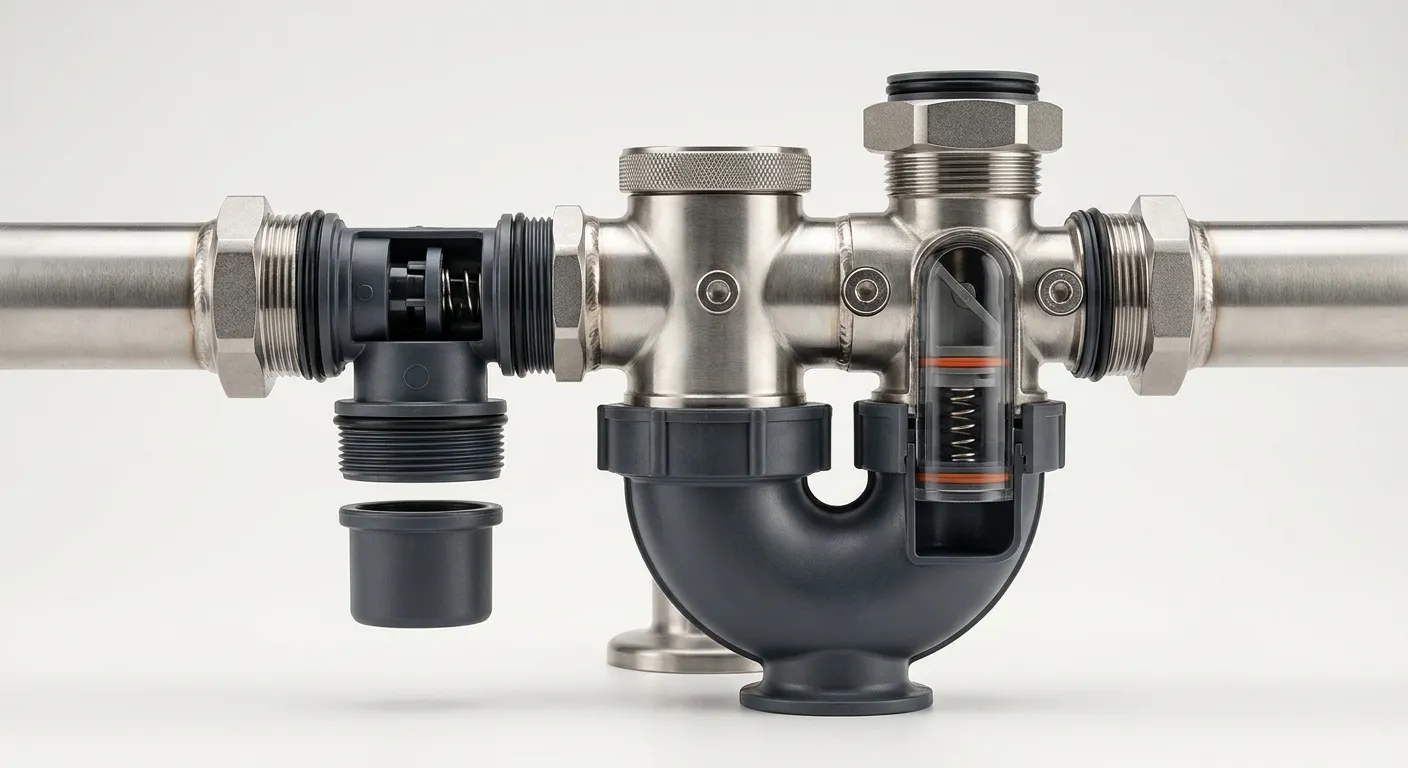
Key Features
- EN 1253-7 compliant mechanical closure
- Automatic sealing mechanism
- Prevents sewer gas and insect entry
- Works even when drains are seldom used
- Replaceable mechanical seal cartridge
- Compatible with standard floor drains
- Tested for 100,000+ open/close cycles
- Easy installation into existing drains
Materials & Specifications
Available Materials
Ideal For
Product Details
Technical Specifications
| Standard | EN 1253-7 compliant |
| Mechanism | Spring-loaded/gravity-operated flap |
| Seal Type | Airtight (silicone/EPDM gasket) |
| Durability | 100,000+ open/close cycles tested |
| Response Time | < 1 second (opens/closes instantly) |
| Odor Tightness | 150Pa minimum pressure differential |
| Flow Rate | 20-35 L/min (depending on size) |
| Sizes Available | Ø100mm, Ø150mm (round); 100x100mm, 150x150mm (square) |
| Building Height | Up to ~4 storeys per EN 1253-7 |
| Temperature Range | 0°C to +80°C |
Installation Guide
Need Reliable Odor Control?
Our mechanical odor traps provide guaranteed odor prevention for seldom-used drains and critical applications.
Request SamplesRelated Products
Waterless Trap Inserts (EAD 180020)
Innovative waterless trap inserts that use a floating membrane seal to prevent odors without requiring water. Perfect for water conservation projects and freeze-prone environments.
Learn more →Bathroom Floor Wastes
Specialized floor wastes designed for bathroom wet room installations. Features compact design with efficient drainage and odor prevention. Available in round and square designs.
Learn more →Frequently Asked Questions
How does a mechanical odor trap work?
Mechanical odor traps use a precision-engineered flap mechanism that operates automatically based on water flow. When water enters the drain, the weight and flow of the water pushes the flap open, allowing water to pass through into the plumbing system. When water flow stops, a spring-loaded or gravity-operated mechanism closes the flap, creating an airtight seal (using a silicone/EPDM gasket) that prevents sewer gases, odors, and insects from entering the building. The entire open/close cycle happens in under 1 second, ensuring continuous odor protection with no manual intervention required.
What does EN 1253-7 compliance mean?
EN 1253-7 is the European standard specifically covering floor drains with mechanical closure devices. Compliance means the mechanical trap has been independently tested and certified for: (1) **Odor tightness** — maintains an airtight seal under 150Pa minimum pressure differential; (2) **Flow rate** — does not significantly restrict water flow compared to water seal traps; (3) **Durability** — withstands 100,000+ open/close cycles without failure; (4) **Load bearing** — maintains structural integrity under specified load class; (5) **Corrosion resistance** — all components pass salt spray testing. EN 1253-7 compliant traps are recognized by European building codes and many international codes as an acceptable alternative to standard water seals. We provide test reports and compliance certificates with every order.
Are there limitations on where mechanical traps can be used?
Yes, EN 1253-7 restricts mechanical odor traps to buildings up to approximately four storeys (12-15 meters above the trap). This is because the pressure differential in tall building drainage stacks can exceed the closing force of the mechanical flap. For buildings taller than four storeys, standard water seal traps with proper venting are required. Additionally, mechanical traps should not be used where the drain is exposed to: (1) Temperatures above 80°C (may degrade the silicone gasket); (2) Aggressive chemicals that could attack the internal mechanism components; (3) Heavy debris loads that could jam the flap mechanism. Always check local building codes for specific application requirements in your market.
How long does the mechanical seal last before replacement?
Our mechanical seal cartridges are tested for 100,000+ open/close cycles, which typically translates to 5-10 years of service in normal residential and commercial use. The cartridge is designed to be easily replaceable without removing the drain body from the floor — simply lift the grate, remove the old cartridge, insert the new one, and test. We recommend annual inspection to verify smooth operation and complete flap closure. Replacement cartridges are available as spare parts with no minimum order quantity. For high-usage commercial applications (hotels, restaurants), we recommend replacement every 3-5 years regardless of apparent condition.
Can mechanical traps be retrofitted into existing floor drains?
Yes, our mechanical odor traps are designed for easy retrofit into most standard floor drain bodies. The trap cartridges are available in standard sizes (Ø100mm, Ø150mm round; 100x100mm, 150x150mm square) that fit the majority of European and international floor drain bodies. For retrofit installation: (1) Remove the existing trap insert from the floor drain; (2) Clean the drain body; (3) Insert the mechanical trap cartridge; (4) Test operation. No plumbing modifications are required. If you are unsure about compatibility, send us a photo of your existing floor drain and we will confirm the correct cartridge size.
What is the difference between mechanical traps and waterless traps?
Both mechanical and waterless traps provide odor prevention without relying on a water seal, but they use different mechanisms: (1) **Mechanical traps** (EN 1253-7) use a spring-loaded or gravity-operated flap that opens with water flow and closes when flow stops. They have moving parts and are tested for 100,000+ cycles. They are recognized by EN 1253-7 and accepted in European building codes; (2) **Waterless traps** (EAD 180020-like) use a floating membrane or silicone seal that opens with water flow and closes by gravity/membrane elasticity when flow stops. They have no moving parts and are essentially maintenance-free. They are ideal for freeze-prone environments (no water to freeze) and water conservation applications. Choose mechanical traps for EN 1253-7 compliance and code recognition; choose waterless traps for freeze resistance and zero-maintenance operation.
Request Mechanical Odor Traps (EN 1253-7) Samples & Pricing
Get product samples, technical datasheets, and competitive OEM pricing from our team.