
Balcony & Terrace Drainage Solutions
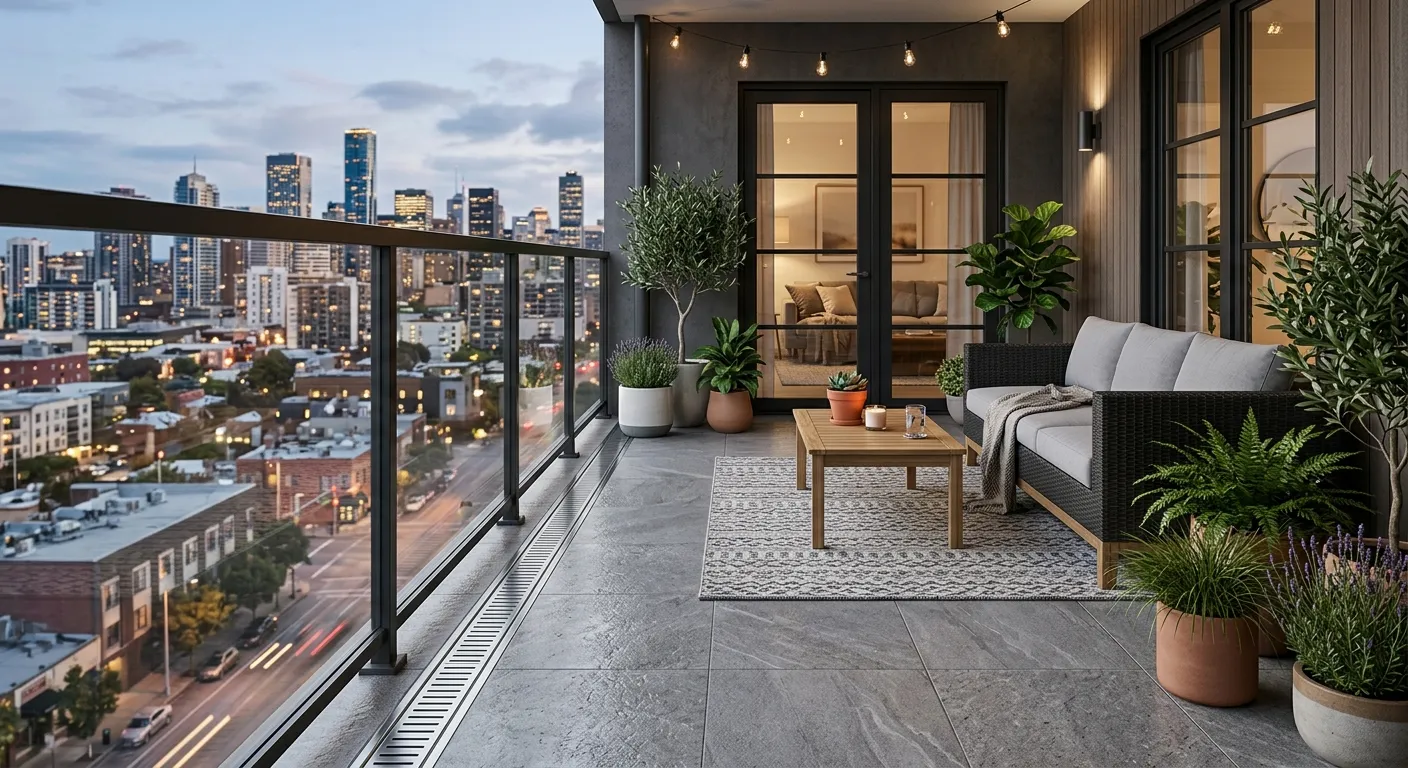
Weather-resistant drainage solutions for balconies, terraces, and outdoor areas. Maintain structural integrity while ensuring effective water management in all weather conditions.
Key Challenges
- Managing heavy rainfall and preventing water ingress
- Resisting UV degradation and temperature cycling
- Preventing freeze damage in cold climates
- Coordinating drain placement with architectural design
- Ensuring proper slope on thin balcony floor assemblies
Benefits
- 316 stainless steel for maximum weather and corrosion resistance
- High-flow capacity handles heavy rainfall events
- Freeze-resistant design for cold climate applications
- Leaf and debris catchers reduce maintenance
- Waterless trap options prevent freeze-related odor seal failure
Solution Overview
Installation Notes
Sourcing Balcony Drains for a Project?
Get material recommendations, flow calculations, and freeze-protection solutions for your balcony and terrace drainage.
Request QuoteRecommended Products
Balcony & Terrace Floor Wastes
Weather-resistant floor drains designed for outdoor balconies, terraces, and patios. Built to withstand UV exposure, temperature variations, and heavy rainfall.
View product →Waterless Trap Inserts (EAD 180020)
Innovative waterless trap inserts that use a floating membrane seal to prevent odors without requiring water. Perfect for water conservation projects and freeze-prone environments.
View product →Case Study
A luxury condominium development in Vancouver, Canada specified our 316 stainless steel balcony drains with waterless trap inserts for 150+ units. The waterless traps eliminated freeze-related odor issues during winter, and the 316 grade construction provided long-term corrosion resistance in the coastal marine environment.
Frequently Asked Questions
How many drains does a balcony or terrace need?
The number of drains depends on the balcony/terrace area, local rainfall intensity, and architectural constraints. As a general rule, one drain can effectively serve approximately 15-25 square meters with proper slope. Larger terraces may require multiple drains positioned at low points. In regions with heavy rainfall (tropical climates), more drains may be needed. Consult local building codes for specific requirements.
Should balcony drains have water seals or waterless traps?
For balconies in cold climates, waterless trap inserts are recommended because traditional water seals can freeze, allowing sewer gases (if connected to a waste line) or insects to enter. In warm climates, a simple water seal or even an untrapped drain (if discharging to atmosphere) may be sufficient. Check local plumbing codes for balcony drain requirements in your market.
What slope is required for balcony drainage?
Building codes typically require a minimum slope of 1:80 (1.25%) to 1:50 (2%) from the building facade toward the drain. The drain should be positioned at the lowest point. For large terraces, multiple drains with defined drainage zones ensure effective water management. Waterproofing should extend up the wall (minimum 150mm) and be properly detailed at the drain penetration.
Can balcony drains discharge directly to the exterior or must they connect to plumbing?
This depends on local building codes. In many jurisdictions, balcony drains can discharge to the exterior (open drainage) if the volume is manageable and the discharge point is properly detailed. In multi-story buildings, balcony drains are often connected to the building's stormwater plumbing system. Our drains work with both configurations - the key is proper trap selection based on whether the drain connects to a pressurized waste system.
What is the expected service life of balcony and terrace drains?
The service life of balcony and terrace drains depends primarily on material selection and environmental conditions: (1) **304 stainless steel in temperate inland environments** — 20-30+ years with minimal maintenance; the 304 grade provides excellent resistance to UV, temperature cycling, and atmospheric corrosion in non-coastal locations; (2) **316 stainless steel in coastal environments** — 25-40+ years; the molybdenum content provides superior resistance to salt spray and chloride-induced pitting that would corrode 304 grade within 2-3 years; (3) **304 stainless steel in coastal environments** — 5-10 years before surface rust and pitting becomes visible; not recommended for long-term coastal installations. Our stainless steel drains significantly outperform plastic (PVC/PP) drains which typically degrade within 10-15 years from UV exposure, becoming brittle and cracking. The stainless steel construction maintains its structural integrity indefinitely — the most common reason for replacement is aesthetic (surface staining) rather than structural failure. For maximum longevity in any environment, we recommend: annual inspection of the grate and frame, cleaning of the debris catcher basket, and verification that the waterproofing membrane remains intact at the drain flange junction.
Can you provide drainage design plans for large terrace and rooftop projects?
Yes, our technical team provides comprehensive balcony and terrace drainage design services for large residential, commercial, and hospitality projects. Our drainage design package includes: (1) **Drain placement layout** — CAD drawing showing optimal drain positions based on balcony/terrace geometry, slope direction, and rainfall intensity for your geographic location; (2) **Flow calculation** — sizing verification ensuring each drain can handle the expected rainfall volume from its drainage zone, including extreme weather events (typically designed for 100mm/hour rainfall in tropical climates, 75mm/hour in temperate climates); (3) **Slope specification** — detailed slope gradients (1:80 to 1:50) from building facade toward drains, with contour lines showing drainage paths; (4) **Waterproofing details** — cross-section drawings showing proper membrane integration at drain flanges, wall upstands, and penetration points; (5) **Product specification** — recommended drain models, material grades (304 vs 316 based on coastal proximity), outlet sizes, and trap types (water seal vs waterless for freeze-prone areas); (6) **Bill of quantities** — complete material list with unit counts for pricing and ordering. For rooftop terraces and podium decks, we also coordinate with the structural engineer to ensure drain positions align with the structural slab and waterproofing system. This service is provided free of charge for projects ordering 50+ drain units. Send us your architectural drawings and we will provide a drainage design recommendation within 5-7 business days.
Get Balconies & Terraces Solutions
Contact our team for product recommendations and project-specific drainage solutions.