
Laundry Floor Wastes
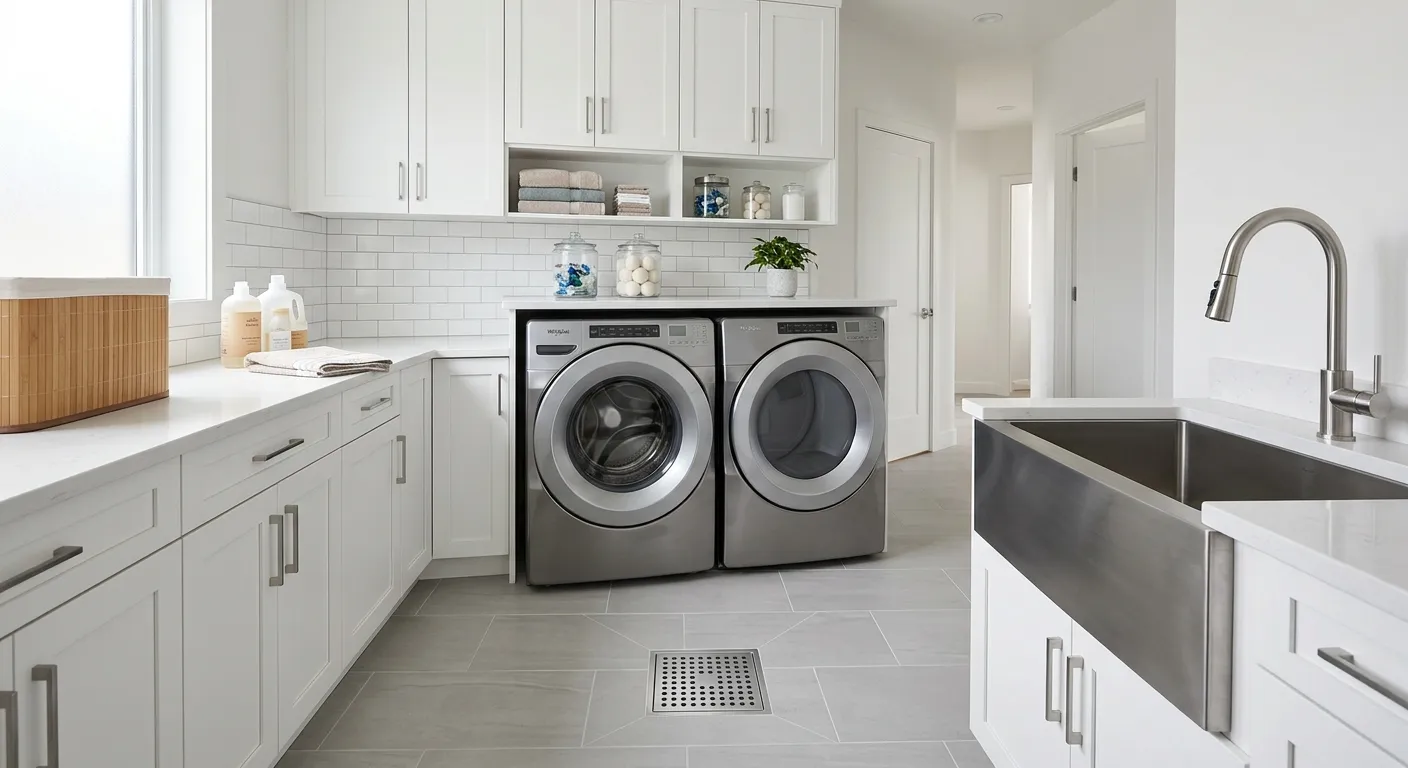
Heavy-duty floor drains designed for laundry areas and utility rooms. Superior flow capacity to handle washing machine discharge and high-usage environments.
Key Features
- High-flow capacity for washing machine discharge
- Heavy-duty construction for high-traffic areas
- Large debris catcher for lint and foreign objects
- 304 stainless steel construction
- 50mm water seal
- Reinforced grate for durability
- Compatible with standard plumbing connections
- Easy maintenance access
Materials & Specifications
Available Materials
Ideal For
Product Details
Technical Specifications
| Flow Rate | 30-40 L/min (high-flow configuration) |
| Outlet Size | 50mm (standard), 75mm (commercial) |
| Water Seal Depth | 50mm |
| Body Depth | 90-110mm |
| Material | 304 Stainless Steel |
| Debris Catcher | Large-capacity removable basket |
| Grate | Reinforced anti-slip design |
| Load Rating | Pedestrian/light commercial |
Installation Guide
Need Laundry Drainage Solutions?
Get product samples, technical specifications, and competitive pricing for residential or commercial laundry drainage.
Request QuoteRelated Products
Bathroom Floor Wastes
Specialized floor wastes designed for bathroom wet room installations. Features compact design with efficient drainage and odor prevention. Available in round and square designs.
Learn more →Commercial Kitchen Trench Drains
Grease-compliant trench drains for commercial kitchens and food service areas. Designed to meet health department standards with proper slope, material selection, and easy cleaning access.
Learn more →Mechanical Odor Traps (EN 1253-7)
EN 1253-7 compliant mechanical odor traps that automatically seal to prevent sewer gases from entering buildings. Ideal for seldom-used floor drains where water seals may dry out.
Learn more →Frequently Asked Questions
Can this floor waste handle washing machine discharge?
Yes, our laundry floor wastes are specifically designed to handle the high-volume, rapid discharge from residential washing machines. The 50mm outlet diameter and high-flow trap configuration can manage discharge flow rates of 30-40 L/min, which exceeds the output of most residential washing machines (15-25 L/min during drain cycles). For front-loading machines that discharge water at higher velocity with smaller volume, the laundry floor waste handles the discharge without any issues. For commercial laundry operations with industrial-grade washing machines, we recommend our commercial trench drain solutions which offer higher flow capacity.
How do I deal with lint buildup in laundry drains?
Our laundry floor wastes feature a large debris catcher basket that captures lint, coins, and other foreign objects before they enter the plumbing system. Maintenance is straightforward: (1) Lift the grate (no tools required); (2) Remove the debris basket; (3) Empty the lint and debris; (4) Rinse the basket under running water; (5) Replace the basket and grate. For high-usage laundry rooms (4+ loads per day), we recommend cleaning the basket weekly. For standard residential use (2-3 loads per day), bi-weekly cleaning is sufficient. If lint buildup occurs in the plumbing pipe below the drain, use a plumbing snake or call a plumber for pipe cleaning.
What is the difference between laundry and bathroom floor wastes?
Laundry floor wastes are engineered for different performance requirements than bathroom floor wastes: (1) Higher flow capacity — laundry drains handle 30-40 L/min vs 20-30 L/min for bathroom drains, to manage rapid washing machine discharge; (2) Larger debris catcher — the laundry basket is 30-50% larger to capture lint and foreign objects; (3) Heavier-duty construction — reinforced grate and thicker steel (1.5-2.0mm vs 1.2-1.5mm) for high-traffic utility areas; (4) Larger outlet — 50mm minimum (vs 40mm for bathroom) to handle rapid discharge without backup. While a bathroom floor waste can technically be used in a laundry room, it may not handle the discharge volume adequately and will require more frequent cleaning.
Do you offer laundry drains for commercial applications?
For commercial laundry operations (hotels, hospitals, laundromats, industrial facilities) where multiple industrial-grade washing machines discharge simultaneously, we recommend our commercial and industrial trench drain solutions. Our commercial kitchen trench drains (316 stainless steel, pre-sloped channels) offer higher flow capacity (60-80 L/min), heavier-duty load ratings (up to Class F/40 tonnes), and easier cleaning access with removable channel sections. Contact our technical team for commercial laundry drainage recommendations based on your specific machine count, discharge volume, and floor layout requirements.
Can laundry floor wastes handle hot water discharge?
Yes, our 304 stainless steel laundry floor wastes can handle hot water discharge from washing machines without any issues. The 304 grade maintains its structural integrity at temperatures up to 300°C, far exceeding the maximum washing machine discharge temperature of 60-90°C (for sanitize cycles). The stainless steel construction will not deform, crack, or degrade from repeated exposure to hot water. The 50mm water seal may evaporate slightly faster with hot water discharge, but normal washing machine usage patterns will refill the trap with each cycle, maintaining the odor seal.
Request Laundry Floor Wastes Samples & Pricing
Get product samples, technical datasheets, and competitive OEM pricing from our team.