
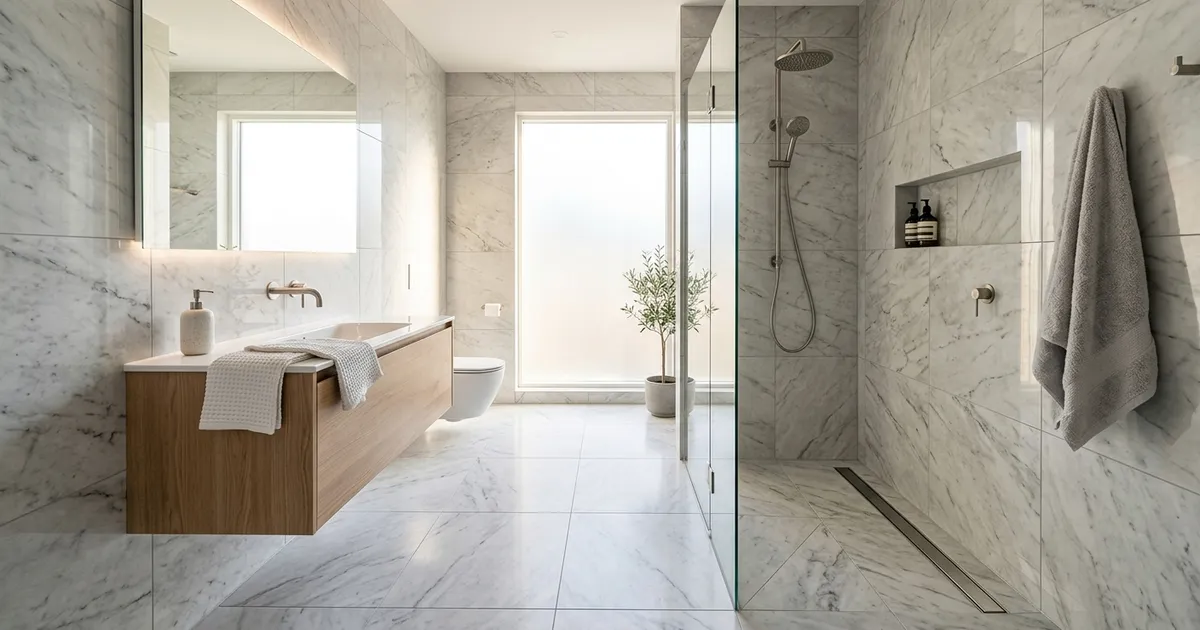
Modern Bathroom Design Trends: Large Format Tiles & Linear Drains
Bathroom design has undergone a fundamental transformation over the past decade. The shift from small-format tiles and visible shower enclosures toward expansive surfaces, minimal visual clutter, and barrier-free accessibility is reshaping how architects and homeowners think about wet spaces. At the heart of this transformation are two technologies: large-format porcelain tiles and linear shower drains. Together, they enable the clean lines, seamless surfaces, and spatial openness that define contemporary bathroom design.
The Rise of Large-Format Tiles
Large-format tiles — generally defined as tiles with at least one edge longer than 600mm — have become the dominant choice in residential and commercial bathrooms. Tiles measuring 600×600mm, 600×1200mm, 800×800mm, and even 1200×2400mm are now readily available from major manufacturers worldwide.
The appeal is visual and practical. Fewer grout lines create a cleaner, more monolithic surface that makes small bathrooms feel larger and enhances the sense of space in larger rooms. Large-format tiles also reduce maintenance — fewer grout joints means less area for mold, mildew, and soap scum accumulation.
However, large-format tiles demand specific installation practices. The substrate must be perfectly flat (within 3mm over 3 meters) because large tiles cannot conform to uneven surfaces. Tile adhesive must be applied with a large-format trowel (12mm notch minimum) and back-buttered to ensure full coverage. The slope toward the drain must be a single-plane fall rather than the traditional multi-directional pyramid, which creates awkward cuts at the corners of large tiles.
Why Linear Drains Are Essential for Large-Format Tile
This is where linear drains become indispensable. Traditional center-point drains require a 4-way slope — the floor falls from all walls toward the center. With large-format tiles, this creates 4 diagonal cuts radiating from the drain, each tile requiring complex L-shaped or triangular cuts. The result is visual clutter, wasted tile, and multiple grout joints that undermine the entire aesthetic of large-format tile.
Linear drains solve this by enabling a single-plane slope. The floor is level along the drain line (typically at one wall) and slopes uniformly upward to the opposite wall. Each large-format tile can be cut with a single straight cut along the slope line, maintaining the clean, continuous grout pattern that is the hallmark of large-format tile installation.
The result is a bathroom floor that looks like a continuous expanse of stone or porcelain, interrupted only by a slim, elegant drain channel at the perimeter. This is the look that defines luxury residential bathrooms, boutique hotels, and high-end commercial projects worldwide.
Curbless Showers and Universal Design
Curbless (barrier-free) showers — where the shower floor is level with the bathroom floor, with no step or threshold — have moved from accessibility requirement to design aspiration. They eliminate the visual barrier of a shower curb, making the entire bathroom feel like one continuous space.
Linear drains are the enabling technology for curbless showers. Because the drain spans the full width of the shower opening, it intercepts water before it can migrate into the dry area of the bathroom. The floor slopes at 1:80 to 1:100 toward the drain, creating an invisible boundary that contains water within the shower zone while maintaining a level floor throughout.
This design approach aligns perfectly with universal design principles — bathrooms that are accessible to people of all ages and mobility levels. As populations age, curbless showers are increasingly specified not just for their aesthetic appeal but for their practical accessibility. They accommodate wheelchair users, reduce trip hazards, and allow the bathroom to serve the homeowner throughout their lifetime without modification.
Wet Rooms: The Ultimate Expression
Wet rooms take the curbless concept further — the entire bathroom is a waterproof wet zone, with the shower area defined only by the position of the drain rather than by walls or curbs. The floor slopes gently toward a linear drain positioned to intercept water from the shower area.
Wet rooms require comprehensive waterproofing of the entire floor and walls, with the linear drain bonded to the waterproofing membrane. The drain's low-profile design (many models are just 55-70mm deep) allows installation in typical residential floor constructions without raising the bathroom floor level.
Our Architect Series linear drains are specifically designed for wet room applications, with ultra-slim grates (15-30mm visible width), tileable grate options that accept the same large-format tile as the floor, and integrated waterproofing flanges compatible with all major membrane systems.
Material Trends: From Polished Chrome to Brushed Finishes
The finish of the drain grate is now considered a design element, not just a functional component. While polished chrome was the default for decades, contemporary design favors brushed and matte finishes that complement the broader hardware palette.
Brushed stainless steel matches the popular brushed nickel and brushed brass faucets and accessories. Matte black finishes create dramatic contrast against light stone or white porcelain. Gold and rose gold finishes add warmth to minimalist spaces. Our linear drains are available in multiple finish options to coordinate with your hardware selection.
Tileable grates — where a section of the floor tile is bonded into the grate frame — create an almost invisible drain that disappears into the floor. This is the ultimate expression of the minimalist aesthetic: a drain that performs flawlessly while being nearly invisible.
The Commercial Influence
The residential bathroom trends described above are heavily influenced by commercial and hospitality design. Luxury hotels pioneered the curbless shower, wet room, and large-format tile aesthetic. Residents experience these designs during travel and bring the expectations home.
For builders and developers, offering contemporary bathroom design is no longer a premium upgrade — it is the baseline expectation. Projects that specify traditional center drains with small-format tiles and visible curbs risk appearing dated before the building is even completed.
Specification Considerations
When specifying linear drains for contemporary bathroom designs, consider: drain length (should match or exceed the shower width), grate width and style ( slim-slot, tileable, or decorative), finish (matching or complementing the hardware palette), and flow capacity (must exceed the showerhead's flow rate, particularly for rain showerheads and body jets).
Our Residential Series linear drains are designed specifically for residential bathroom applications, with lengths from 500mm to 1200mm, multiple grate styles, and flow rates that handle everything from standard showerheads to high-flow rain heads. Explore the full range or contact our team for specification support on your next project.