
Quality Control Checklist for Importing Floor Drains from China
Importing floor drains from China offers significant cost advantages, but quality varies widely between manufacturers. Without a systematic quality control (QC) process, importers risk receiving products with incorrect material grades, poor welding, inadequate surface finish, or performance failures that lead to customer complaints, returns, and reputational damage. This checklist provides the essential QC checkpoints every importer should implement when sourcing stainless steel floor drains from Chinese factories.
Pre-Production: Verify the Manufacturer
Before placing an order, verify that the manufacturer has the capability to produce products meeting your quality standards. Request the following documentation:
Business License and Factory Audit Reports: Confirm the company is a registered manufacturer (not a trading company reselling third-party products). Request recent factory audit reports from recognized agencies (SGS, BV, TÜV) or conduct your own audit.
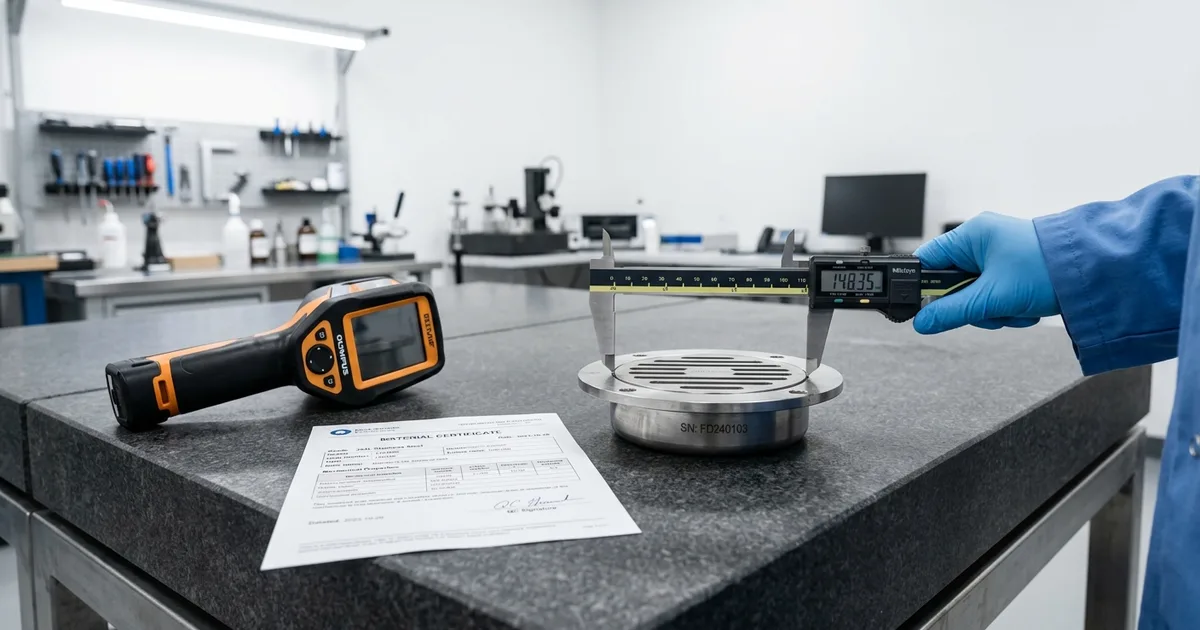
Material Certificates: Require mill certificates for stainless steel raw material. Certificates should specify the grade (304, 316, or 201), chemical composition, and supplier. Reputable manufacturers maintain traceability from raw material batch to finished product.
Previous Export Experience: Manufacturers with established export customers (particularly in Europe, North America, or Australia) understand international quality expectations and compliance requirements. Ask for references from existing customers in your market.
Production Samples: Always request pre-production samples before committing to a bulk order. Samples allow you to verify material quality, finish, dimensions, and workmanship before production begins.
In-Process: Material Verification
Stainless steel grade is the single most important quality factor — and the most common area for fraud. Unscrupulous manufacturers substitute 201 grade for 304, or 304 for 316, pocketing the difference while the importer pays for premium material.
Spectrometer Testing (PMI): Positive Material Identification using a handheld spectrometer verifies the chemical composition of stainless steel in seconds. Non-destructive, accurate, and impossible to fake. Require PMI testing on every batch — either by the manufacturer with documented results, or by a third-party inspection company (SGS, Intertek) during production.
Magnet Testing (Preliminary Screening): 304 and 316 stainless steel are generally non-magnetic (austenitic). 201 grade is slightly magnetic. A simple magnet test can flag suspected 201 substitutions, though it is not conclusive — cold-worked 304 can become slightly magnetic. Use magnet testing as a preliminary screen, not a final verification.
Nickel Content Verification: The key differentiator between 201 and 304 is nickel content. 304 contains 8-10.5% nickel; 201 contains 3.5-5.5%. Spectrometer testing provides exact nickel content. This is the definitive test for material grade verification.
In-Process: Dimensional and Visual Inspection
Dimensional Accuracy: Check critical dimensions against the approved drawing or sample: overall length, width, depth, outlet diameter, flange dimensions, and water seal depth. Tolerances should be ±0.5mm for critical dimensions. Use calibrated calipers and gauges.
Welding Quality: Inspect all welds visually and by touch. Welds should be smooth, continuous, and free of porosity, undercut, spatter, or incomplete fusion. TIG (Tungsten Inert Gas) welding is the standard for stainless steel floor drains — it produces clean, precise welds. Spot welds or poor-quality MIG welds are signs of cost-cutting.
Surface Finish: The surface finish should match the approved sample. For brushed finishes, the grain should be uniform and consistent in direction. For mirror/polished finishes, the surface should be free of scratches, pits, and orange-peel texture. Passivation (acid treatment to restore the protective oxide layer) should be performed after polishing.
Grate Fit and Operation: The removable grate should fit snugly in the frame without excessive play or binding. For twist-lock grates, the locking mechanism should engage smoothly. For clip-in grates, the clips should hold securely but allow removal with reasonable force.
In-Process: Performance Testing
Flow Rate Test: Measure the drain's flow rate (liters per minute) at a defined water head pressure. Compare results against the manufacturer's specifications and EN 1253-1 requirements (if applicable). Undersized flow capacity indicates blockages in the trap or undersized outlet.
Water Seal Test: Verify the water seal depth meets EN 1253-1 (minimum 50mm for trapped drains) or the specified requirement. Insufficient water seal allows sewer gas entry. Excessive water seal depth restricts flow and can cause slow drainage.
Load Test: Apply the specified load class (e.g., Class N = 1.5 tonnes for pedestrian areas, Class K = 90 tonnes for industrial) and verify the drain does not deform, crack, or fail. Load testing is particularly critical for commercial and industrial drains.
Odor Tightness Test: Pressurize the drain outlet and verify the sealing mechanism (water seal, mechanical closure, or combined) prevents air leakage. This test identifies manufacturing defects that allow sewer gas bypass.
Salt Spray Test (Corrosion Resistance): For stainless steel drains, salt spray testing (ASTM B117) verifies corrosion resistance. 304 grade should withstand 24 hours without red rust. 316 grade should withstand 48+ hours. Request test reports from the manufacturer or conduct independent testing.
Pre-Shipment: Final Random Inspection (AQL)
Before shipment, conduct a final random inspection using Acceptable Quality Limits (AQL) sampling. The standard approach is ANSI/ASQ Z1.4 (ISO 2859-1) sampling at General Inspection Level II.
For critical defects (safety hazards, wrong material grade): AQL 0 (zero tolerance). For major defects (functional failures, visible damage): AQL 2.5. For minor defects (cosmetic issues, packaging): AQL 4.0.
Inspect a random sample from each production batch. Check every unit in the sample for: material grade (spot-check with spectrometer), dimensions, welding quality, surface finish, grate fit, and packaging. If the sample fails AQL criteria, reject the entire batch and require 100% inspection and rework.
Packaging and Shipping
Floor drains are heavy, precision products that can be damaged by poor packaging. Verify: each drain is individually wrapped in protective film or foam; drains are packed in sturdy cartons with internal dividers to prevent contact and scratching; carton weight and stacking limits are clearly marked; shipping marks and labels match the packing list and commercial invoice.
For container loading, verify cartons are loaded tightly (no shifting during transit), heavy cartons are on the bottom, and the container is dry and free of contaminants.
Ongoing Quality Management
Quality control is not a one-time event — it is an ongoing relationship with your manufacturing partner. Establish: clear quality specifications in your purchase agreement (material grade, dimensions, finish, performance, AQL levels); regular factory audits (at least annually, preferably semi-annually); trend tracking of defect rates over time; corrective action procedures when defects are found; and long-term partnership incentives for consistent quality.
At Melody Drain, we welcome customer quality audits, provide full material traceability, and conduct 100% inspection before shipment. Our factory maintains SGS and ISO 9001 certifications, and we provide spectrometer test reports, material certificates, and performance test data with every order. Contact us to discuss your quality requirements or request a factory audit invitation.