
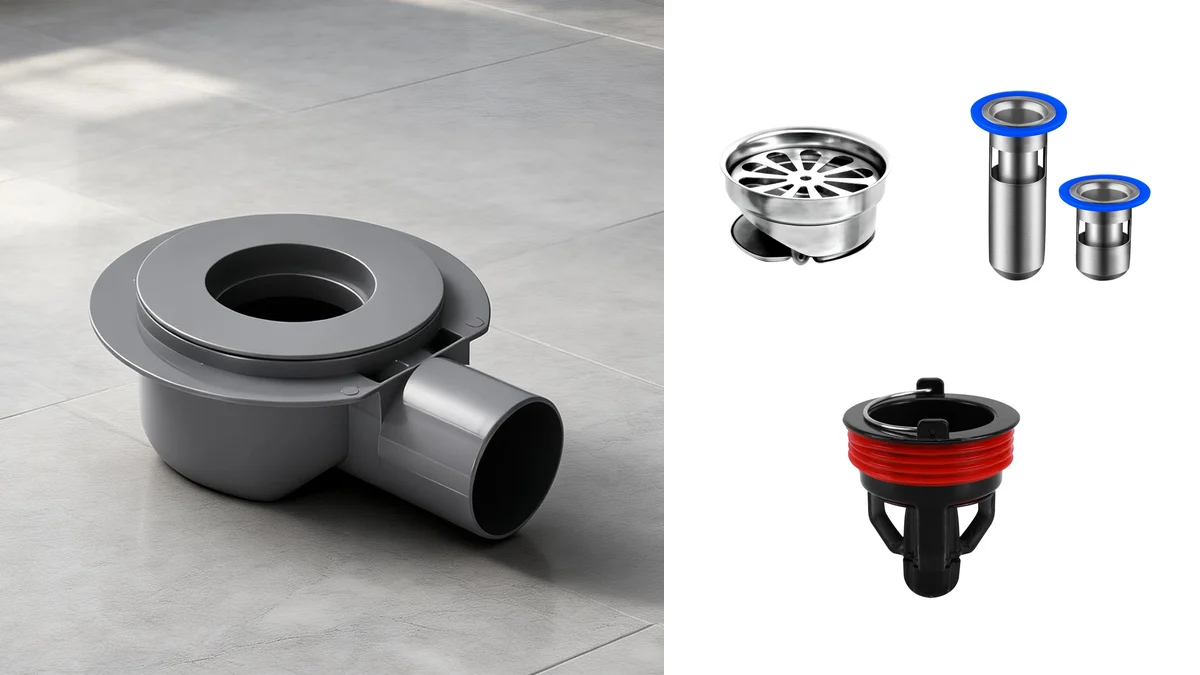
Floor Drain Traps, Primers and Odor Prevention: How Water Seals Fail
A floor drain that smells is almost never a bad drain. It is a drain whose water seal is gone. The seal - a column of water, usually about 2 inches (50 mm) deep, held in the trap below the grate - is the only thing standing between your room and the sewer. When it fails, sewer gas walks straight up the pipe and into the space. This guide explains how water seals fail, the ways to protect them, and how a drop-in odor-proof core gives a floor drain a second line of defense.
This guide is part of our floor drain types, parts and applications guide.
What a Trap Seal Actually Does
Every plumbing fixture drains through a trap: a U- or P-shaped bend that always holds some water. Gas from the sewer cannot push through that water, so it stays on the pipe side. A floor drain is no different - it just sits in the floor, where it is easy to forget.
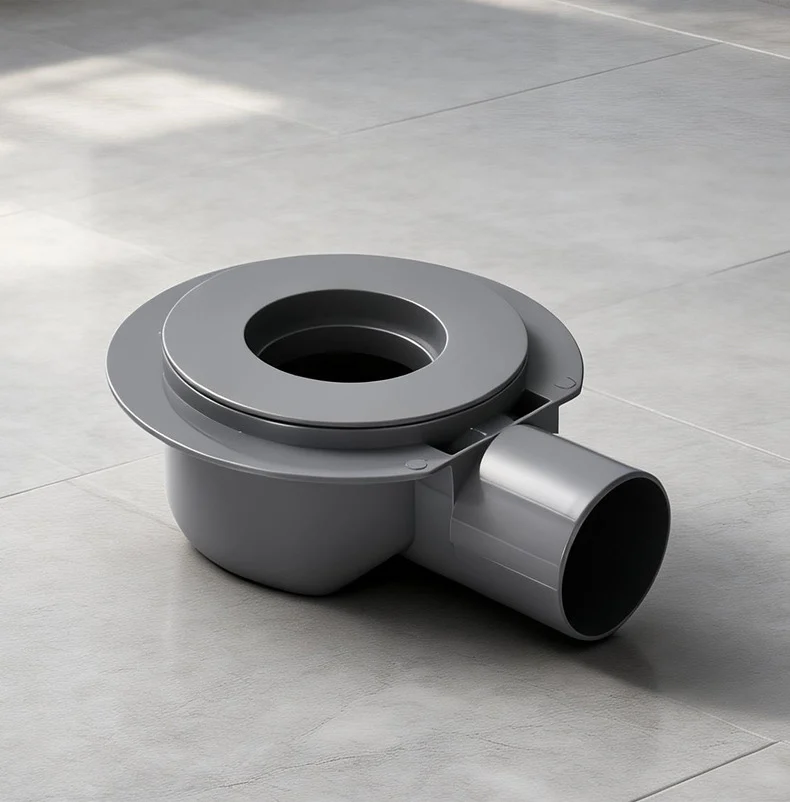
That is the weakness. A sink gets used daily, so its trap is constantly refilled. A floor drain in a basement, a utility room, a guest bathroom or a plant room may see water once a month - or never. The seal is only as good as the last time something put water in it.
How Water Seals Fail
Five failure modes cover almost every smelly floor drain:
- Evaporation. The most common by far. A trap that is never refilled simply dries out. Dry air, heated floors, warm rooms and ventilation all speed it up. Depending on conditions, a seal can last anywhere from a few weeks to a couple of months; hot, dry, ventilated spaces are at the fast end.
- Siphonage. A heavy discharge elsewhere in the system can pull the water out of a trap, especially where venting is poor or undersized.
- Back pressure. Pressure surges in the drainage stack can push the seal out of the trap into the room.
- Wicking. A strand of hair or lint draped over the trap weir can draw water out by capillary action, a drop at a time.
- A dry or damaged connection. A cracked trap, a poorly sealed joint, or a drain that was never connected to a trap at all.
Evaporation is a maintenance problem. The others are design and venting problems. If a drain keeps losing its seal even though it sees regular use, look at the venting as well as the drain.
Ways to Protect the Seal
1. Keep the seal charged by hand
Pour a few cups of water into the drain every few weeks. Free, and entirely dependent on someone remembering. Fine for one guest bathroom; impractical across a building with dozens of drains.
2. Deeper seals and larger reservoirs
A deeper trap, or a drain body that holds a larger volume of water above the seal, simply takes longer to dry. It buys time but does not remove the problem.
3. Trap primers (a plumbing add-on)
A trap primer is a separate plumbing device that tops up the trap with a small amount of water. It needs a water connection and pipework to the drain, so it is installed as part of the plumbing system. Trap primers are not part of our range, and this guide does not cover how to select them - ask your plumbing designer or supplier.
4. Drop-in odor-proof cores
A core sits inside the drain bore and seals the opening physically, so the barrier does not depend on standing water. It needs no water supply and no pipework, and it drops into an existing drain without tools. When water flows, the core opens; when flow stops, it closes again.
Our deodorizer cores come in three sealing styles:
- Stainless gravity flap - water weight pushes the flap open; when flow stops it swings shut under gravity onto a silicone seat. No magnets, no complex parts, tolerant of dirty water.
- ABS self-sealing valve - a side-hinged silicone flap with a stepped rubber collar that grips the bore wall and seals in uneven old drains.
- Magnetic-float core - a float cone held closed by magnets; water pressure lifts it off its seat and it re-seals the instant flow stops, with strong closing force even at low water volume.
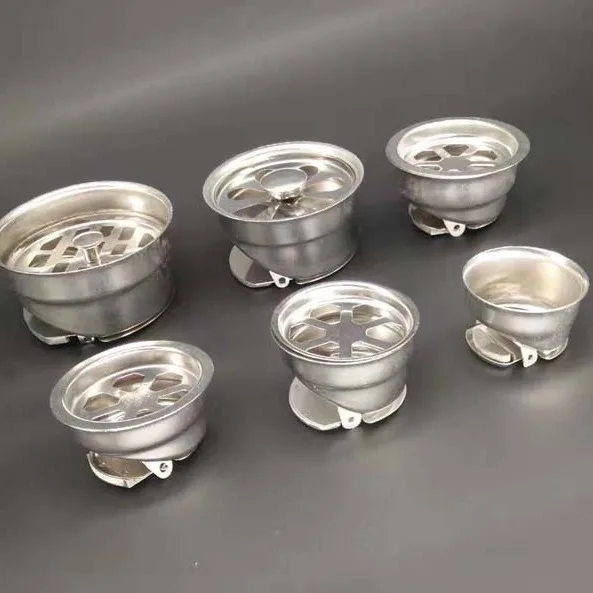
We also make waterless trap inserts with a flexible membrane valve, and mechanical odor traps for new installations.
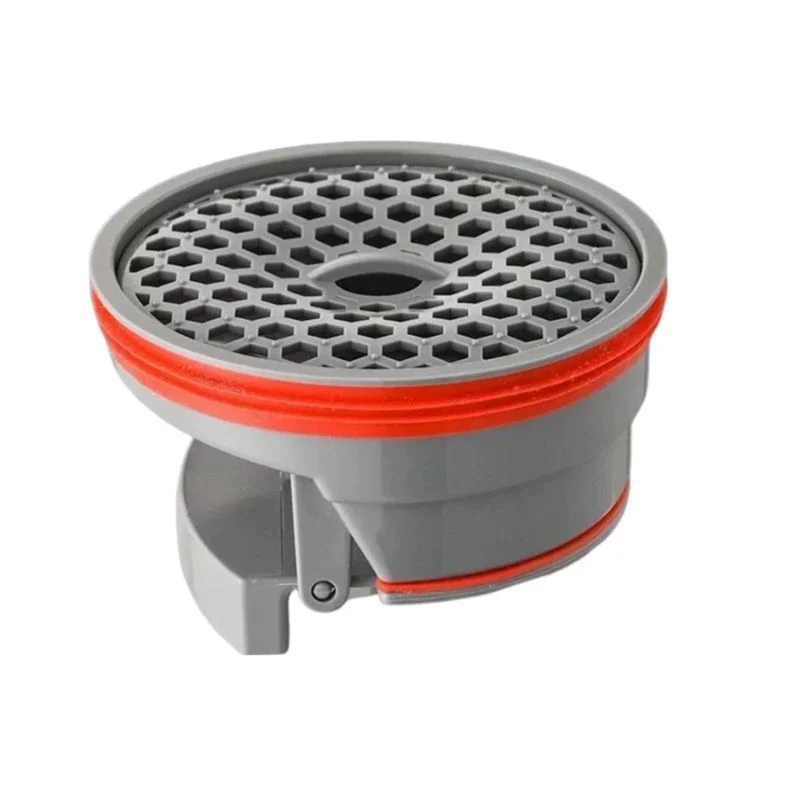
Choosing a core:
- Match the bore. Cores are selected by one measurement: the inner diameter of the drain bore where the core sits. Ours cover 40, 50, 60 and 100 mm bores.
- Flow follows pipe size. The limit on how much water a drain passes is mainly the diameter of the drain pipe. Where flow is high, choose a large-bore core (100 mm).
- Clean it from time to time. Lift the core out, rinse the flap or seat and clear the strainer top - a few minutes now and then keeps the seal closing fully.
Double Protection: Add a Magnetic-Float Core to a Water-Seal Drain
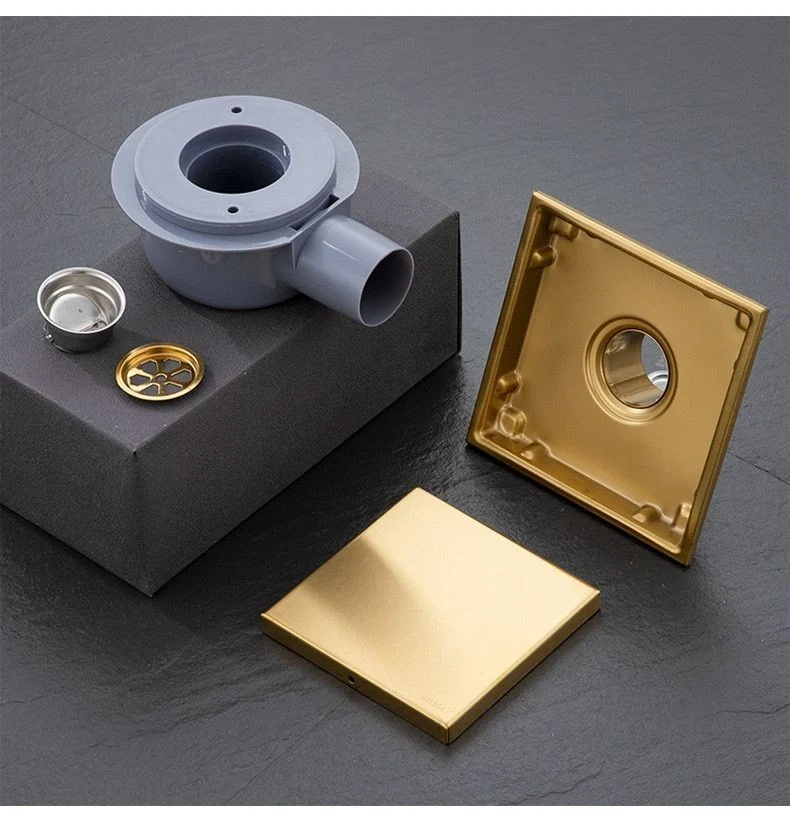
A water-seal drain that has dried out and started to smell does not have to be replaced. Drop a magnetic-float, insert-type odor-proof core into the drain outlet. While the water seal is healthy, it does its normal job. When the seal dries out, the core's closed valve still blocks the gas path - so the two work together as double insurance, and the drain keeps smelling fresh even in weeks when nobody refills it. It fits without tools: lift the grate, seat the core in the bore, press until the collar seals, and check by pouring water.
Which Solution for Which Drain?
| Situation | Best fit | Watch out for |
|---|---|---|
| Guest bathroom or holiday home, used rarely | Drop-in core | Occasional cleaning |
| Basement or plant-room floor drain | Water seal plus a magnetic-float core as backup | Choose the right bore size |
| Underfloor-heated bathroom | Core - heat dries a water seal fast | Pick a core for the drain bore |
| Balcony, terrace or unheated space | Waterless insert - nothing to freeze | Leaves and grit - clean periodically |
| Commercial kitchen | Cleanable drain with regular flushing; large-bore core if used | Grease builds up quickly - clean often |
| Drain that smells after drying out | Add a magnetic-float core in the outlet | Check the bore diameter |
For project-specific drainage, see our residential bathroom, balcony and terrace and commercial kitchen pages.
If a Drain Already Smells: A 5-Minute Check
- Pour water in. If the smell disappears in a few minutes, the seal had dried out - evaporation.
- Does it come back? If it returns within days on a drain that sees regular use, suspect siphonage, back pressure or wicking: check venting and clear any hair from the trap.
- Check the connection. A drain that smells even after the seal is filled may have a cracked trap or a bad joint.
- Look at the pipe above it. A washing-machine or appliance pipe pushed loosely into a drain can leave a gap for gas; an anti-odor connector closes it - see our drain connectors.
- Add a core for lasting protection, as described above.
Melody Drain
We manufacture stainless steel floor drains and floor-drain odor controls, including deodorizer cores, mechanical odor traps, waterless trap inserts and drain connectors, plus floor drain bodies such as our industrial gullies with a removable water seal. Send us the drain type, bore size and how often it is used and we will recommend a fit. Contact us or message us on WhatsApp.